HowAmbrosiaWorks
Ambrosia is early. We’re building this right now and we want you involved from the start.

AI Has a Blind Spot
AI systems have been trained on the internet. Arguments, hot takes, product reviews, people trying to look impressive. What the internet doesn’t contain is the quiet, private, daily reality of raising a family.
The patience of teaching a toddler to use a spoon. The creativity of making dinner from whatever’s left in the fridge. The emotional intelligence of comforting a child after a bad day at school. These moments are where human values live.
Robots are entering homes. AI assistants are already in our kitchens. They need to understand how a real home works. A home with toys on the floor and a toddler pulling on your leg while you cook.
You’ve already lived this story.
Social media made your teenager anxious. Your eight-year-old can’t focus for ten minutes. You scroll your phone at 2am instead of sleeping. Family dinners compete with screens. You feel more connected and more isolated than any generation of mothers before you.
That wasn’t an accident. It was a design choice. Thirty years of technology optimised for engagement, built around keeping your attention rather than helping your family. Every major platform that shaped the last generation – Facebook, Instagram, TikTok – was designed to maximise time spent on screen.
The AI your children grow up with will either be trained on the internet, or trained on your love. Right now, nobody is building the second option except us.
Ambrosia exists because the next wave of technology will be shaped by whatever data it’s trained on. The robots entering homes, the AI assistants that will help raise children alongside you. If that data comes from the internet, those systems will inherit its values: outrage, performance, extraction. If it comes from you, from the daily reality of patience, sacrifice, and unconditional care, they’ll inherit yours.
This is already happening. Training runs are underway today at every major AI lab in the world. Ambrosia is how mothers get a seat at that table.
Built in Phases.
Compounding at Every Step.
We don’t ask for everything on day one. Each phase stands on its own. Each phase makes everything before it more valuable. Data labelling is the throughline that connects them all.
Each phase is a complete experience. Phase 1 alone is meaningful work with meaningful pay. Video and sensors are separate opportunities, not requirements.
Label. Learn. Earn.
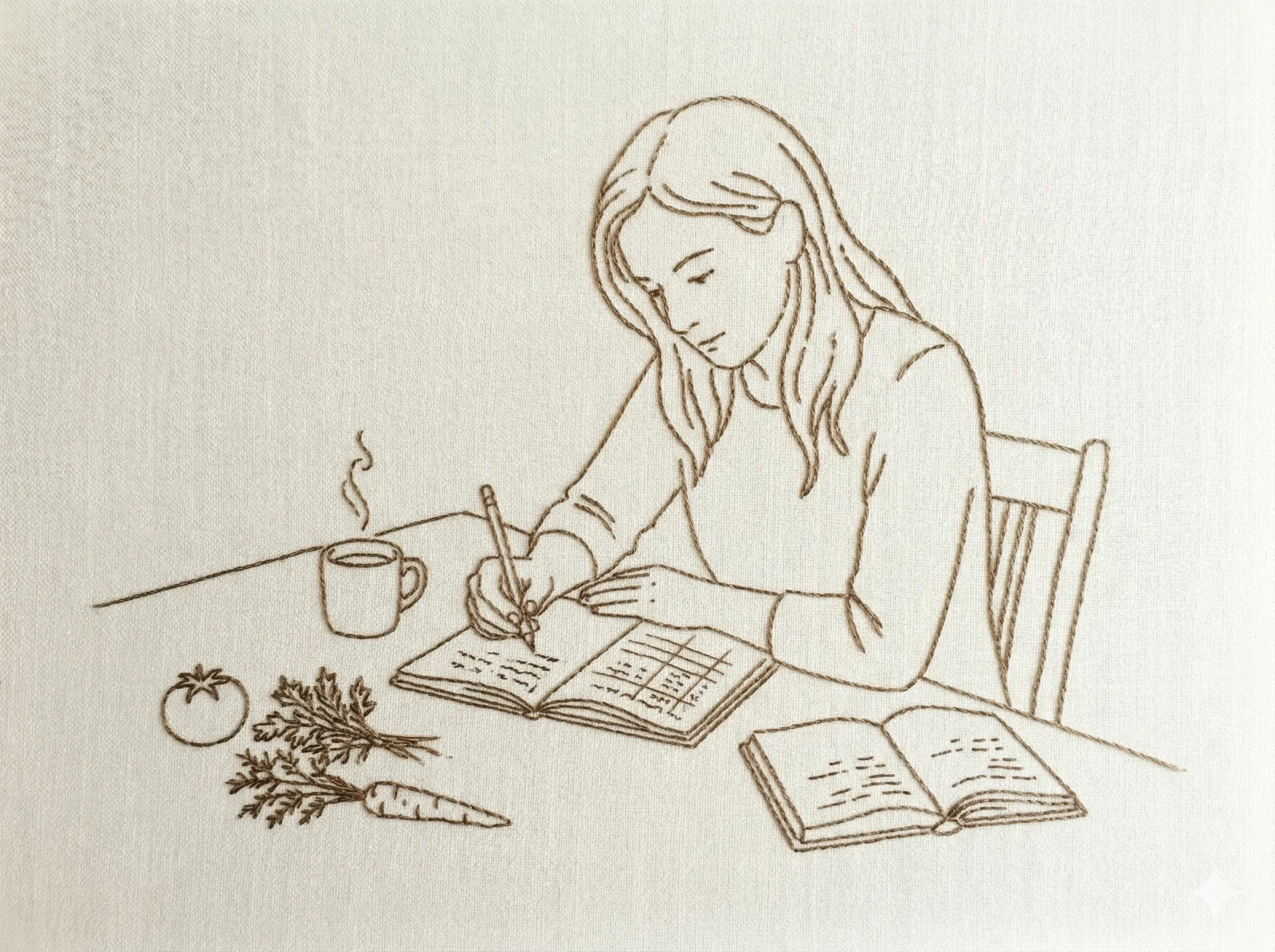
The games and tasks ARE the labelling. Rank meal options, compare recipes, solve nutrition trade-offs — and when you’re done, you have your family’s meals planned for the week. Help your child with a reading challenge — and the way you taught, adapted, and encouraged becomes the training data. The work doesn’t happen alongside your life. It produces outcomes your family actually uses.
Data Labelling
Between games, between tasks — direct labelling work. Compare two AI responses to a parenting question. Annotate images of kitchens and playrooms. This is where your contextual knowledge matters most.
Meal Planning
Rank recipes, compare ingredients, solve your family’s weekly menu like a puzzle. When you’re done, dinner is planned — and every choice you made is structured preference data.
Home Education
Challenges you do alongside your children. The teaching IS the game — and the data captures how a patient mother actually teaches in real time.
Household Management
Build your family’s weekly rhythm like a strategy game. The schedule you create is real — and every decision you made building it trains AI on how families actually organise their lives.
$25–30/hour
For doing things that help your family, structured as data labelling. You create the value, you get paid for it.
Compensation is per task, not per hour of screen time. A 15-minute meal planning session that generates 50 preference data points earns approximately $8. The rate reflects the quality and specificity of the data — AI companies pay premium rates for real-world domestic context.
Learn more about Phase 1 →When you’re ready for more, video labelling slots into the rhythm you’ve already built — between levels, between tasks. You label your own footage. Clips of the dinner you just cooked, the homework session you just ran. It’s more of what you’re already doing, not a new commitment.

See What You See
Once the app is part of your routine, you can add video. Wear a lightweight harness or smart glasses, tap record, do what you always do. Your 12-minute video of making spaghetti bolognese while your daughter does homework is more valuable than a hundred hours of lab footage. It shows how tasks happen.
The labelling gets richer
Now you’re not just labelling abstract data — you’re annotating your own footage. Tasks you actually performed, in contexts you actually lived. Two streams of data, both flowing back into labelling, each making the other more valuable.
Your control is absolute
Nothing leaves your phone without your approval. You review every video before sharing.
Children’s faces are always automatically blurred. This is a default, not an option you have to remember to turn on.
You can delete any video at any time. Deletion removes it from our systems completely.
Video is completely optional. You can use the app tools and community without ever recording anything.
You’re teaching robots how to stir a pot without spilling, fold a fitted sheet (if you can, most of us can’t), and move gently around a sleeping child. Skills that seem trivial to you are extraordinarily difficult for machines.
Learn more about Phase 2 →App data→ labels → better tools
Video data→ labels → richer context
Two streams of data. Both flowing back into labelling. Each making the other more valuable.

The Jewelry
Beautiful rings, bracelets, and pendants with tiny 6-axis motion sensors inside. The same type in your phone that knows when you tilt the screen. They capture fine motor skills and movement data: how your hands and body move through everyday tasks.
The labelling reaches full depth
Choice data, video, and motion — three streams, all feeding back into labelling, each enriching the others. You can see hand movements overlaid on video. You can label the exact micro-decisions that make a task work. The data gets richer at every step.
Fashion-first. Technology-invisible.
Elegant, understated, beautiful. Objects you’d wear because you love them, that happen to contain sensors. And unlike every other wearable on the market, the jewelry is free. We give it to you. You get paid for the data. You wear them when you choose to, pause capture any time, and delete any session.
The sensors capture how you stir, fold, carry, chop, and pour. You know exactly how much pressure to use cracking an egg. How to adjust your grip on a wet plate. How to shift a sleeping child without waking them. This physical knowledge is what robots need to move with care, and only you can teach it.
Learn more about Phase 3 →Where All Roads Lead
Each phase compounds. Every stream feeds back into labelling.
After each phase, the data feeds back into the labelling. After each phase, the labelling gets richer. In the end, we create world models built around maternal instinct and unconditional love.


Complete Transparency
What happens with your data, and who controls it. These three data types arrive in phases — each building on what came before.
Choice Data
Every decision in the app. Meals, activities, schedules. A record of the real decisions families make every day.
Video Data
Recordings of domestic tasks you choose to share. Visual training data that teaches robots how real homes work.
Motion Data
Movement data from the jewelry. How your hands and body move through tasks. This teaches robots to move with human care and precision.
Who will use this data
Domestic robotics: Companies building robots for homes. Your data will teach them how real homes work.
AI assistants: Systems for meal planning, scheduling, education. Your data will make them understand family life.
Safety research: Organisations working to ensure AI acts in human interests. Your data provides examples of behaviour rooted in care and real human priorities.
Educational technology: Learning tools for children. Your data about what actually works will make them better.
We’re in conversations with companies across these sectors. As partnerships are confirmed, we’ll name them specifically. We won’t list logos we haven’t earned.
Privacy specifics
All data is encrypted in transit and at rest.
Video and motion capture are always optional. The app tools work without them.
Children’s faces are always automatically blurred. Always.
You review and approve every piece of data before it leaves your device.
Deletion means deletion. From our systems, completely.
We will comply with GDPR, COPPA, and local data protection laws in every market.
Where We Are Right Now
We’re being transparent about our stage because you deserve to know exactly what you’re looking at.
What’s built
Phase 1 app tools (meal planning, education activities, household management, data labelling) are in development. Early versions are being tested with a small group of mothers.
What’s designed
The wearable jewelry sensors for Phase 3. We’ve designed the form factor and sensor architecture. Manufacturing partnerships are being finalised.
What’s decided
Mothers will be paid. $25–30/hour for app data and labelling, ~$5/hour for video, and the wearable jewelry is free. Privacy will be non-negotiable. The app tools will be useful on their own, regardless of whether you ever contribute data.
What’s NOT decided
The specific launch markets. The exact jewelry designs. Some details of the compensation structure are still being refined with early mothers. We’re designing these with you.
What we’re asking
If this resonates with you, we want you involved from the start. Shaping the product, testing early versions, and helping us get it right. Your feedback now is worth more than a thousand focus groups later.
Why ‘Love Is All You Need’
You are a mother. Everything that lives today originated from you.
Every human who ever built anything, discovered anything, loved anyone was first held by a mother. Was first fed. Was first taught patience, and kindness, and that they mattered. The values that hold civilisation together were not written in books first. They were lived in homes. By you. By your mother. By hers.
Now we are building machines that will share our homes, care for our children, and shape the world our grandchildren inherit. These machines will learn their values from whatever data they are trained on. Right now, that data is the internet, a place built on outrage, performance, and extraction.
Without you, these machines learn to argue. With you, they learn to care.
Your unconditional love, the kind that shows up at 3am, that holds a screaming toddler without flinching, that makes dinner for the fortieth time with nothing but patience and leftovers, is extraordinarily valuable data. It is the only data that can teach a machine what it means to put someone else first. To be gentle. To be present. To love without condition and without audience.
That’s the hardest thing any human does. And it is the single thing AI most needs to learn.
The name ‘Love Is All You Need’ is a reference to ‘Attention Is All You Need,’ the 2017 paper that launched modern AI. Their insight: one mechanism was the missing ingredient. Ours is the same. The missing ingredient is love.

For Your Children
The robots and AI your children grow up with will be shaped by their training data. Right now, that data comes from the internet. With Ambrosia, it could come from you.
Your patience. Your creativity. Your love. Encoded into the machines that will be part of your children’s world.
For You
You already do the essential work. Ambrosia doesn’t change what you do. It changes two things: first, you get tools that make your week easier. Second, the work you’re already doing becomes the foundation for safer, more helpful AI.
Every meal you plan, every mess you clean, every moment of patience. Visible, valued, and compensated.
For the World
For thirty years, technology has been built by a narrow demographic. Ambrosia is being built by and for mothers.
Every major AI company is worried about making AI safe and helpful. They’re spending billions. And they’re largely ignoring the single largest repository of caring, patient, selfless human behaviour: the daily life of mothers. Ambrosia is built on it.
Questions You Might Have
Want to help shape this?
We’re looking for mothers who want to test early versions, give honest feedback, and help design a platform that actually works for your life. No commitment. No cost. Just a conversation.